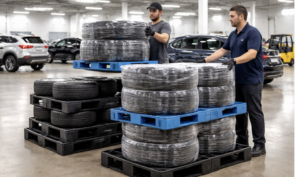
Car dealerships run on speed, order, and consistency. Every square foot in the parts department, service lane, detailing area, and back-of-house storage space has a direct effect on how smoothly the business performs. When inventory is hard to access, when parts are stacked in ways that create clutter, or when storage systems are not built around the dealership’s real workflow, time gets lost in small increments all day long. Those small losses add up to slower service, more handling, avoidable damage, and a less organized environment for both staff and customers.
That is why tailored storage systems matter more than many dealerships realize. A strong operational setup is not only about software, digital retailing, or better forecasting. It is also about physical organization. Industry coverage from McKinsey and Cox Automotive continues to point toward the same conclusion: dealerships are under pressure to improve productivity, tighten workflow, and make better use of technology and process design across the business. In practical terms, that means the dealership floor, parts storage areas, and inventory handling methods all deserve more attention than they often receive.
Why Storage Efficiency Matters at a Car Dealership
In a dealership, storage is not passive. It affects how quickly a technician gets the part needed for a repair, how accurately the parts team receives and stages incoming inventory, and how cleanly accessories and supplies are managed in limited space. The more organized the physical inventory system becomes, the easier it is to support faster service turns, cleaner counts, and stronger accountability. NADA has emphasized the importance of managing parts inventory effectively because it directly affects cash investment and profitability. That same principle extends to the storage tools used to hold and move that inventory every day.
A dealership can have good people and a strong brand and still lose efficiency through disorganized storage. Wood pallets that splinter, absorb moisture, vary in size, or break down over time can create friction in environments that depend on repeatable handling. Plastic pallet systems offer a more controlled solution. When those pallets are designed specifically for the dealership’s inventory profile, rack layout, floor space, and handling routines, they help create a more dependable storage environment from receiving to retrieval.
How Tailored Plastic Pallet Systems Improve Daily Workflow
The biggest value of a customized pallet program is alignment. A dealership does not need a one-size-fits-all platform if its real-world inventory includes boxed OEM parts, bulky accessories, detailing supplies, seasonal merchandise, marketing materials, and service-related stock that moves at different speeds. Custom Pallets allow the storage system to match the business instead of forcing the business to adapt to a generic pallet footprint.
That kind of alignment improves workflow in several ways. It can reduce wasted aisle space, improve stackability, create cleaner zones for fast-moving items, and support more consistent receiving and staging practices. It also helps staff locate and move products more efficiently, which matters in a dealership where parts availability and timing influence technician throughput and customer satisfaction. Inventory discipline is not just an accounting idea; it is an operational habit, and even Wikipedia’s overview of inventory management reflects how stock mix, quantities, and handling processes all work together inside a business system. A better pallet setup strengthens that system at the ground level.
Customized plastic pallets also support cleaner visual organization. A dealership can use different pallet sizes, deck styles, lip configurations, and labeling positions for different departments or product categories. That makes it easier to separate accessories from service inventory, keep fragile items more secure, and maintain more orderly overflow storage. For dealerships that want to improve counting accuracy and reduce misplaced stock, that kind of structure can make a meaningful difference over time.
Where Car Dealerships Gain the Most Value
The parts department is often the clearest place to see the benefit. Parts inventory needs to stay accessible, traceable, and protected. When pallets are stable and uniform, they help keep shelves, staging zones, and back-room floor storage cleaner and easier to manage. That matters even more when the dealership handles a high volume of daily receipts and technician pull requests.
Service operations also benefit. A service department depends on speed, but speed without order creates mistakes. J.D. Power’s findings on dealership service experience have highlighted the effect of appointment delays, communication gaps, and execution issues on customer satisfaction. A dealership that reduces internal friction has a better chance of serving customers on time and with greater consistency. Storage is not the whole answer, but it is part of the answer because good service requires fast internal movement of parts, tools, and related materials. J.D. Power continues to show that service performance remains a key area where operational discipline matters.
Body shop areas, reconditioning zones, and detailing departments can also benefit from a cleaner plastic pallet strategy. Those spaces often involve products or materials that need a more durable, moisture-resistant, and easy-to-clean storage base. Plastic pallets are especially useful where appearance, hygiene, or floor cleanliness matter. A dealership that wants its back-of-house operation to reflect the same level of order as its showroom can gain value from choosing storage equipment that supports that standard.
Why Plastic Pallets Make Sense for Modern Dealership Environments
Consistency is one of the strongest reasons. Plastic pallets are typically more uniform in shape and performance than wood, which supports cleaner stacking, more predictable placement, and easier compatibility with material handling systems. In a dealership setting, that consistency helps reduce minor disruptions that happen when pallets are warped, cracked, or irregular.
Plastic pallets also support a cleaner environment. They do not shed nails or splinters, and they are generally easier to wash down or wipe clean. That can matter in service-related areas, accessory storage, and any part of the dealership where presentation and organization support brand perception. As inventory conditions continue to shift, efficiency becomes even more valuable. S&P Global Mobility reported in early 2026 that inventory remained stable while sales slowed, with supply, aging, and velocity still important considerations. In that kind of environment, dealerships benefit from storage systems that help them manage space well and keep inventory organized instead of letting it become a drag on operations.
Another advantage is durability over time. A dealership that cycles through pallet use every day needs storage equipment that can hold up under repeat handling. While the exact return depends on volume and use case, a more durable solution can help reduce replacement frequency, improve cleanliness, and support a more standardized layout across departments.
How Better Storage Supports Profitability and Customer Experience
A dealership customer may never say the words plastic pallet, but they feel the impact of operational order. They feel it when the advisor can give clearer timelines, when a needed part is easy to locate, when the service department runs with fewer delays, and when the business feels organized behind the scenes. Operational excellence is often invisible when it works well, but it becomes obvious when it does not.
That is one reason dealership efficiency remains such an important industry topic. Coverage from Auto Remarketing has noted the growing role of inventory intelligence and AI in identifying slow-moving stock and improving risk management. Those higher-level tools are valuable, but physical storage still has to support the plan. Data can tell a dealership what needs attention, but the warehouse, parts room, and staging systems still need to be structured well enough to act on that information.
When a dealership improves physical organization, it becomes easier to protect margins in everyday ways. Staff spend less time working around clutter. Parts are easier to stage and count. Damage risk can go down. The facility presents itself more professionally. Those gains may look small in isolation, but together they support a more efficient and more profitable operation.
What to Look for in a Custom Pallet Strategy
The right pallet program for a car dealership should begin with real operational needs. The best fit often depends on the type of inventory being stored, whether the pallets need to be stackable or rackable, how much floor space is available, and how products move between receiving, storage, and service use. A dealership should also think about cleanliness requirements, labeling needs, and whether color coding or department-specific sizing could improve organization.
A strong custom solution is not about adding complexity. It is about reducing friction. It should make the dealership easier to run, easier to navigate internally, and easier to scale as inventory mix changes. That is especially important in an automotive retail environment that continues to evolve through technology upgrades, service expectations, and efficiency pressure across departments. NADA’s fixed operations education resources reinforce how central parts and service performance are to total dealership success, and better storage supports both.
Conclusion
Custom plastic pallets are not a cosmetic upgrade for a car dealership. They are a practical operations tool. When storage systems are designed around the dealership’s actual inventory, movement patterns, and space limitations, they help create a cleaner, more organized, and more efficient business. That affects parts handling, service speed, back-room order, and the overall quality of execution across the dealership.
For dealerships that want better storage without settling for generic solutions, custom plastic pallet systems offer a smart path forward. They support consistency, protect inventory, reduce avoidable friction, and help the business operate with more discipline from the back room to the service drive. In a dealership environment where efficiency is tied closely to profitability, that kind of improvement is worth taking seriously.
