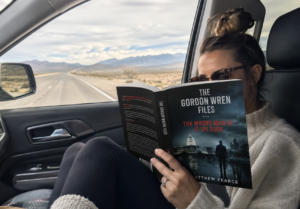
A long road trip has a rhythm all its own. The engine settles into a steady hum, the miles begin to stack up, the scenery changes slowly outside the window, and somewhere between the first gas station stop and the third cup of coffee, the mind starts looking for a story big enough to match the journey. That is where the right thriller can turn a simple drive into something more memorable.
Not every book fits the road. Some stories are too slow for the open highway. Some are too complicated to pick up between rest stops, diner breakfasts, hotel check-ins, and stretches of interstate where the only entertainment is counting exits. A road trip book needs momentum. It needs atmosphere. It needs characters with secrets, danger close enough to feel real, and chapters that make the reader want to keep going just a little farther.
That is what makes The Gordon Wren Files: Book 1: The Wrong Man at the Door such a strong choice for readers who enjoy suspense, intrigue, and high-stakes storytelling. It has the kind of title that already feels like trouble has arrived. A wrong man at the door is not just an inconvenience. It is a warning. It suggests mistaken identity, hidden motives, danger crossing a threshold, and a story that begins with something ordinary turning threatening very quickly.
For readers planning a long drive, packing the right book can matter as much as checking tire pressure, mapping the route, or making sure the playlist is ready. According to Wikipedia’s overview of a road trip, the phrase describes a long-distance journey by car or motorcycle, but anyone who has taken one knows it becomes more than transportation. A road trip is a moving pocket of time, a place where stories feel bigger because the world outside the window keeps changing.
That is why this book belongs in the passenger seat.
A Road Trip Needs a Story With Movement
The best road trip reads are not passive. They do not sit quietly in the background. They pull the reader forward, the same way the road pulls a driver toward the next town, the next state line, or the next place that looks interesting enough to stop.
A strong thriller works especially well because the genre naturally moves. It is built on urgency. Someone knows too much. Someone is being watched. Someone is hiding something. Someone opens the wrong door, trusts the wrong person, or walks into a situation that is much bigger than it first appears. That sense of forward motion pairs perfectly with travel.
The Wrong Man at the Door has that kind of built-in tension. The title alone creates a scene readers can imagine immediately. A person arrives. He should not be there. Something about him is off. From there, the mind starts filling in the possibilities. Is he dangerous. Is he connected to a larger conspiracy. Is he the beginning of a chain reaction. That instant curiosity is what makes a thriller ideal for a long trip, because the reader does not want a story that has to be dragged along. The reader wants a story that keeps pace with the miles.
Good road trip entertainment has to survive interruptions. People stop for fuel. They check into hotels. They switch drivers. They grab food. They pause to look at a strange roadside attraction that nobody planned on visiting. A thriller with clean momentum makes it easier to return to the story without losing interest. It gives the reader a reason to reopen the book after every break.
That quality matters. Road trips have plenty of downtime, but they also have a unique kind of distraction. The right book needs to be strong enough to compete with maps, traffic, weather, scenery, snacks, and conversations about whether the last exit had a better coffee place than the next one.
The Open Road Makes Suspense Feel Bigger
A road trip already comes with a sense of uncertainty. Even the best-planned drive has surprises. Construction slows down the route. Weather changes. A detour sends the car somewhere unfamiliar. The hotel looks different than the pictures. A quiet road at night suddenly feels a little too quiet.
That is why a thriller feels so natural in that setting. Suspense is about controlled uncertainty, and a long drive is full of it. The reader is safe, but the imagination is not. The world outside the window becomes part of the experience. A lonely highway, an unfamiliar town, a dim parking lot, or a late-night stop can all make a spy story feel more immediate.
Automotive safety organizations understand how much preparation matters before a trip. The National Highway Traffic Safety Administration recommends planning routes, checking conditions, and allowing enough time to travel safely. That practical advice fits the real world of road trips, but fiction adds another layer. A suspense novel gives the journey its own emotional weather. It turns the hours between destinations into part of the adventure.
That is one reason The Gordon Wren Files works so well as travel reading. Spy fiction has a way of making ordinary settings feel charged. A door is not just a door. A phone call is not just a phone call. A stranger is not just passing through. The genre trains the reader to pay attention, and road trips already make people more alert to unfamiliar surroundings.
The combination is powerful. The reader moves through real landscapes while the book moves through secret ones.
Why Gordon Wren Belongs in the Passenger Seat
Every memorable thriller needs a central figure who can carry the tension. In a road trip book, that matters even more. The reader is spending miles with this person. The character has to be interesting enough to ride along with, complicated enough to stay engaging, and driven enough to make the story feel alive.
Gordon Wren sounds like the kind of name that belongs in a world of coded information, hidden danger, and decisions that cannot be taken back. A strong series character gives readers something to follow beyond one plot. The first book becomes an entry point, not just a single destination. For readers who like to discover a character early and stay with him through future cases, conflicts, and revelations, this is exactly the kind of setup that makes a long trip feel like the beginning of a larger journey.
That is what makes The Wrong Man at the Door a smart place to start. Book 1 has a special job. It introduces the world, establishes the tone, and gives readers the first real taste of what kind of danger this character is going to face. A strong opening book can build trust quickly, especially when the premise is direct and intriguing.
For readers looking for a spy thriller series to begin before or during a long drive, The Gordon Wren Files offers the appeal of a first mission, a central mystery, and the promise of more to come.
That matters on a road trip because travelers often want more than one book. They want something that can continue after the vacation ends. The best travel reads do not just fill time. They become connected to the memory of the trip itself. Later, the reader remembers the roads, the towns, the hotel rooms, and the chapters that kept them hooked along the way.
A Thriller Gives the Miles a Mission
Long drives can be relaxing, but they can also become repetitive. The same road signs, the same fast-food exits, the same stretches of pavement can start to blur together. A thriller changes that. It gives the reader a mission to follow.
Spy stories are especially good at creating that mission feeling. They often involve surveillance, secrets, betrayal, strategy, intelligence, and danger that hides beneath normal life. That makes them ideal for travelers who want more than background entertainment. A good spy thriller sharpens the mind. It invites the reader to notice details, question motives, and keep track of who can be trusted.
The automotive world is full of its own attention to detail. The Insurance Institute for Highway Safety studies vehicle safety and crash prevention, while drivers rely on planning, awareness, and smart decisions to make travel safer. In fiction, the stakes are different, but the mindset overlaps. Thrillers reward alertness. The small clue matters. The wrong assumption can change everything. The quiet moment may be setting up the next major turn.
That kind of reading experience pairs well with long-distance travel because the story gives structure to the empty spaces. A passenger can read while the road stretches ahead. A driver can listen to an audiobook version when available. Friends or family can talk about the plot between stops. The story becomes part of the trip’s shared experience.
And when a book has a title like The Wrong Man at the Door, it naturally creates that “one more chapter” pull. The reader wants to know who he is. Why he arrived. What he wants. Who is in danger. What Gordon Wren will do next. Those are the kinds of questions that make a book easy to keep beside you on a journey.
The Perfect Mood for Highways, Hotels, and Late-Night Reading
Some books feel best at home. Others feel like they were made for motion. A spy thriller belongs to the second group.
Picture the road trip setting. A hotel lamp glowing beside the bed after a long day of driving. A paperback or e-reader waiting on the nightstand. The low sound of cars passing outside. A half-finished cup of gas station coffee nearby. The day is over, but the story is not. That is the exact environment where suspense thrives.
The experience is even stronger because road trips create temporary spaces. The traveler is between places, and thrillers often live in that same emotional territory. Characters are between safety and danger, truth and deception, trust and betrayal. The reader is not fully at home, and neither are the people in the story. That shared sense of movement makes the book feel more immersive.
The AAA Newsroom regularly covers travel, traffic safety, automotive trends, and driving-related updates, showing how deeply road travel remains woven into American life. People still build memories around the car, the route, and the places they discover along the way. A good thriller can become part of that tradition by giving the trip a sharper edge.
Instead of another forgettable scroll through a phone, the reader gets a story with danger, conflict, and mystery. Instead of zoning out during quiet hours, the reader gets pulled into a world where every detail may matter. Instead of reaching the destination with only a blur of miles behind them, the reader carries a story that made the ride feel more alive.
Why This Book Fits Readers Who Like Smart Suspense
A road trip thriller should not only be fast. It should also be smart. Readers who enjoy spy fiction often want layered tension, not just action. They want the feeling that something larger is happening under the surface. They want characters making difficult choices, information arriving at the wrong time, and danger that feels connected to secrets rather than random chaos.
The Gordon Wren Files: Book 1: The Wrong Man at the Door has the kind of premise that suggests personal danger and larger intrigue can collide. A wrong man at the door is an intimate image. It brings suspense close to home. But because this is part of a Gordon Wren file, the story also carries the flavor of investigation, intelligence, and a wider world of consequences.
That balance is valuable. A good spy thriller does not need nonstop explosions to keep readers engaged. It needs pressure. It needs uncertainty. It needs a reason for the reader to care about what is being uncovered. The most effective suspense often begins with one event that feels simple, then expands until the characters realize the situation is far more dangerous than expected.
That is also how many road trips unfold. A drive begins with a route, a destination, and a plan. Then real life enters. Traffic changes the schedule. A local restaurant becomes the surprise highlight. A wrong turn creates a better story than the original plan. A book that understands tension and discovery fits that same emotional pattern.
For travelers who want something engaging but not disposable, this is the kind of thriller that can make the hours feel shorter and the trip feel richer.
Good Travel Reading Becomes Part of the Memory
Every reader has experienced the strange way books attach themselves to places. A novel read on vacation becomes linked to the beach house. A mystery finished on a plane becomes part of the memory of that flight. A thriller read across several states becomes connected to highways, rest stops, rental cars, mountain views, desert sunsets, and roadside diners.
That is why choosing the right book before a long road trip is not a small thing. It can shape the mood of the journey. It can give the traveler something to look forward to at the end of each driving day. It can turn waiting time into reading time and quiet stretches into suspenseful ones.
The Federal Highway Administration supports the nation’s highway system, and those roads carry more than vehicles. They carry vacations, business trips, family visits, weekend escapes, and cross-country moves. Books travel on those roads too. They sit in backpacks, glove compartments, suitcases, and back seats, ready to make the journey better.
That is the kind of role The Wrong Man at the Door can play. It is not just a book to read when there is nothing else to do. It is a book that fits the road trip mood because it offers movement, danger, curiosity, and the promise of a larger world. It gives the reader a reason to look forward to the next chapter the same way travelers look forward to the next stop.
A Better Alternative to Wasted Travel Time
Long road trips often come with empty pockets of time. People wait while the car charges, while someone grabs snacks, while traffic clears, while hotel rooms are ready, or while everyone else is still getting organized. Those moments are easy to lose to scrolling, but they are perfect for reading.
A thriller makes those moments feel useful. Even ten minutes can move the story forward. One chapter can reveal a clue. One scene can change the direction of the plot. One encounter can make the reader rethink everything that came before.
Automotive publications such as Car and Driver cover the vehicles, technology, and driving culture that shape modern travel, but the emotional side of a road trip still belongs to the people inside the car. The music they play, the conversations they have, the food they regret buying, and the books they bring all become part of the story.
Choosing a thriller like The Gordon Wren Files gives that travel time a sharper purpose. It helps transform pauses into progress. It makes the downtime feel less like waiting and more like entering another world.
That is especially true for readers who enjoy series fiction. Starting Book 1 on a road trip gives the experience a natural beginning. The journey starts outside the car and inside the book at the same time. By the time the traveler returns home, Gordon Wren may already feel like someone worth following into the next case.
Conclusion
A long road trip deserves more than background noise. It deserves a story with momentum, atmosphere, danger, and enough mystery to make the miles feel shorter. The Gordon Wren Files: Book 1: The Wrong Man at the Door has the kind of premise that belongs beside a map, a travel mug, and a packed bag. It starts with an unsettling idea and invites readers into a world where the ordinary can turn dangerous in an instant.
The best travel books do more than fill time. They become part of the trip. They are remembered alongside the highways, hotel rooms, diners, gas stations, and quiet stretches of road where the world seems to open up. A strong thriller can make those moments feel charged with possibility.
For readers who want suspense on the road, Gordon Wren is ready to ride shotgun. The Wrong Man at the Door is the kind of book that can turn a long drive into a mission, a quiet evening into one more chapter, and an ordinary road trip into a story worth remembering.
