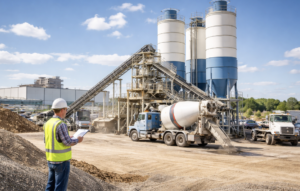
The automotive sector depends on more than vehicle design, assembly lines, and supplier networks. It also depends on the physical environments where manufacturing, logistics, storage, expansion, and support operations take place. That is where Oklahoma Concrete Batching Plants become part of a much bigger economic story. When automotive companies expand production capacity, improve distribution networks, modernize service infrastructure, or develop new facilities, concrete is one of the foundational materials that helps turn those plans into something real and lasting.
Automotive growth is tied to manufacturing strength, transportation access, safety standards, workforce development, and long-term capital investment. The broader automotive industry is one of the world’s largest industrial sectors, and in the United States it remains deeply connected to domestic manufacturing, logistics, and infrastructure planning. Oklahoma may not always be the first state people think of in automotive conversations, but its industrial position, regional connectivity, and construction readiness make it relevant to companies that need strong foundations for new growth.
Why Concrete Infrastructure Matters to Automotive Growth
Automotive growth is never just about selling more vehicles. It is also about building and improving the spaces where vehicles and components are designed, assembled, stored, transported, tested, serviced, and supported. Every new warehouse, supplier facility, distribution hub, equipment yard, service center, parking area, and plant addition depends on durable site work. Concrete is essential in that process because it supports structural performance, traffic loads, daily operations, and long-term durability.
That matters even more in an industry where timelines, consistency, and scale are critical. When an automotive company or supplier moves forward on a facility project, delays in material supply or inconsistent concrete production can create broader construction setbacks. A dependable batching operation helps maintain project flow, improve scheduling confidence, and support quality control across pours of different sizes and applications. In practical terms, batching plants help automotive-related construction move from planning to production with fewer weak points in the chain.
Oklahoma’s Strategic Position in Automotive-Related Development
Oklahoma holds a useful position in the central United States for industrial development. Its access to regional highways, freight movement, and surrounding manufacturing markets makes it attractive for projects that serve broader automotive activity, whether directly or indirectly. Automotive expansion often stretches far beyond vehicle assembly itself. It includes parts suppliers, equipment companies, logistics providers, maintenance networks, fleet operations, and industrial contractors that support production.
This is where concrete batching becomes especially relevant. Automotive growth tends to create a ripple effect. A plant expansion can increase demand for truck courts, loading areas, access roads, maintenance pads, equipment foundations, and utility structures. Supplier growth can drive the need for new commercial buildings and industrial yards. Distribution and transportation projects can require substantial concrete work to handle repeated traffic and operational wear. When those developments happen in or around Oklahoma, concrete batching capacity becomes an important part of regional readiness.
Automotive Facilities Demand Strength, Precision, and Reliability
Automotive projects are not casual builds. These are environments where heavy equipment, repeated movement, safety compliance, and operational efficiency all matter. A floor slab in an automotive facility does more than hold up a building. It may need to support machinery, withstand daily forklift use, tolerate moisture and temperature swings, and deliver performance over many years of hard use. Exterior concrete can be just as important, especially in staging areas, drive lanes, loading zones, and employee parking.
That means the quality of the mix matters. The timing of the pour matters. The consistency of production matters. A capable batching plant supports each of those needs. It helps contractors and project owners avoid the kind of inconsistency that can create problems later in the life of a property. In automotive-related construction, that reliability is not a minor benefit. It is part of protecting uptime, safety, and long-term asset value.
Safety, Compliance, and Modern Automotive Expectations
The modern automotive environment is shaped by strict expectations around safety, engineering, and performance. Agencies such as the National Highway Traffic Safety Administration emphasize the importance of vehicle and equipment safety, while the industry itself continues to adapt to new design, manufacturing, and compliance demands. These expectations influence more than the vehicles being built. They also influence the standards of the places where automotive work happens.
A well-built automotive site starts with sound construction decisions. Concrete plays a direct role in site integrity, traffic handling, drainage performance, and general durability. When developers, contractors, and suppliers invest in quality concrete production from the start, they reduce the risk of avoidable breakdowns in the built environment. That kind of planning aligns with the larger direction of the automotive industry, where performance and accountability are becoming more important, not less.
The Workforce and Economic Impact Behind the Industry
Automotive growth carries weight because it supports jobs, production, supplier activity, and regional business development. Federal labor data tracks motor vehicle manufacturing and related parts manufacturing as significant industries within the broader U.S. economy. Employment, wage activity, and production trends in those categories show how important the sector remains to industrial communities and the companies that serve them.
For Oklahoma, that matters because industrial construction often grows around opportunity. As automotive-related business expands across the country, regions that can support fast, dependable site development are in a stronger position to benefit. Concrete batching plants contribute to that readiness in a practical way. They help make industrial construction more responsive, more scalable, and more dependable for investors, builders, and project managers.
This is one reason concrete infrastructure should not be treated like a background detail. It is part of economic development. It supports the spaces where people work, where goods move, and where growth becomes visible. In that sense, Oklahoma concrete batching capacity does not just support concrete jobs. It supports momentum in sectors that depend on physical expansion, including automotive.
How Industry News and Policy Trends Strengthen the Case
Anyone watching Reuters Autos & Transportation can see that the automotive world is constantly being shaped by production shifts, supply chain decisions, regulatory pressure, investment strategies, and changes in manufacturing priorities. Trade issues, electric vehicle strategy, plant decisions, supplier adjustments, and regional investment choices all affect where development happens and how quickly construction demand follows.
That is why concrete batching should be viewed as part of a forward-looking industrial ecosystem. Automotive growth does not happen in isolation. It requires land development, utility support, transportation access, facility construction, and long-term maintenance planning. Oklahoma companies that can supply the concrete side of that equation are helping make the state more competitive for serious industrial work.
It also helps that automotive decision-makers increasingly pay attention to the full environment around a project. They look at transportation access, construction capability, material supply, energy considerations, labor availability, and long-term operating practicality. A region that can demonstrate dependable support infrastructure has a stronger story to tell, and concrete production is part of that story.
Sustainability, Energy, and the Future of Automotive Construction
The automotive sector is evolving in response to energy efficiency goals, emissions standards, and changing technology priorities. The U.S. Department of Energy Vehicle Technologies Office highlights ongoing work around advanced vehicle technologies, efficiency, and transportation innovation, while the U.S. Environmental Protection Agency continues to track the environmental impact of transportation. Those pressures influence vehicle design, manufacturing strategy, and infrastructure decisions across the sector.
That shift creates new opportunities for construction planning. Automotive companies that expand or modernize often want facilities that are durable, efficient, and built with long-term performance in mind. Concrete remains central to that effort because it supports large-scale industrial footprints and can be incorporated into projects built for longevity, safety, and operational efficiency. Oklahoma batching plants that understand the needs of modern industrial construction are positioned to serve not just today’s projects, but the next wave of automotive-related development as well.
Why This Topic Builds Trust and Authority Online
An article like this works well for digital authority because it connects industrial expertise with a broader economic narrative. It shows that concrete batching is not a narrow topic disconnected from real-world growth. It is part of how automotive expansion actually happens on the ground. When content explains that connection clearly, it becomes more valuable to readers, search engines, and industry decision-makers alike.
It also helps build credibility when the article reflects a wider knowledge base instead of staying trapped inside sales language. Referencing recognized sources such as BLS automotive employment data, NHTSA vehicle safety resources, and major industry reporting helps reinforce that the discussion is rooted in real industrial context rather than empty claims. That kind of content supports stronger trust signals because it shows relevance, depth, and connection to authoritative information.
Conclusion
Oklahoma concrete batching plants play a more important role in automotive growth than many people realize. They support the physical side of industrial expansion, from plant additions and supplier facilities to logistics yards, service centers, infrastructure improvements, and long-term site performance. In an industry where speed, reliability, compliance, and durability all matter, concrete production is not a side note. It is part of the foundation that helps growth happen.
As the automotive sector continues to respond to manufacturing shifts, policy changes, safety expectations, and technology evolution, the demand for dependable industrial construction will remain strong. Oklahoma is well positioned to contribute to that momentum, and concrete batching capacity is part of the reason why. When the right infrastructure is in place, automotive growth becomes easier to build, easier to support, and easier to sustain over time.
